Monday, November 19, 2018

Frozen shoulder - Diagnosis and treatment

Diagnosis

During the physical exam, your doctor may ask you to move in certain ways to check for pain and evaluate your range of motion (active range of motion). Your doctor might then ask you to relax your muscles while he or she moves your arm (passive range of motion). Frozen shoulder affects both active and passive range of motion.
In some cases, your doctor might inject your shoulder with a numbing medicine (anesthetic) to determine your passive and active range of motion.
Frozen shoulder can usually be diagnosed from signs and symptoms alone. But your doctor may suggest imaging tests — such as X-rays or an MRI — to rule out other problems.

Treatment

Most frozen shoulder treatment involves controlling shoulder pain and preserving as much range of motion in the shoulder as possible.

Medications

Over-the-counter pain relievers, such as aspirin and ibuprofen (Advil, Motrin IB, others), can help reduce pain and inflammation associated with frozen shoulder. In some cases, your doctor may prescribe stronger pain-relieving and anti-inflammatory drugs.

Therapy

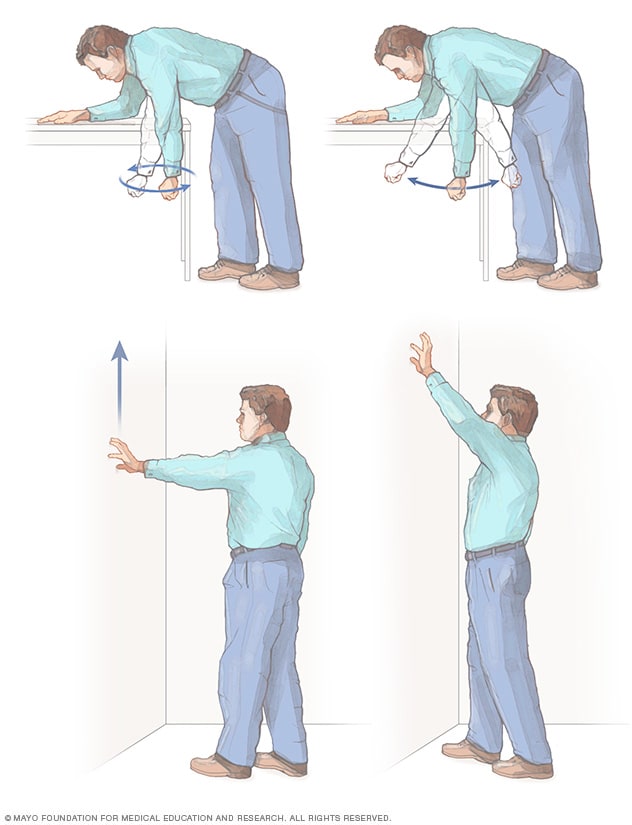
A physical therapist can teach you range-of-motion exercises to help recover as much mobility in your shoulder as possible. Your commitment to doing these exercises is important to optimize recovery of your mobility.

Surgical and other procedures

Most frozen shoulders get better on their own within 12 to 18 months. For persistent symptoms, your doctor may suggest:
  • Steroid injections. Injecting corticosteroids into your shoulder joint may help decrease pain and improve shoulder mobility, especially in the early stages of the process.
  • Joint distension. Injecting sterile water into the joint capsule can help stretch the tissue and make it easier to move the joint.
  • Shoulder manipulation. In this procedure, you receive a general anesthetic, so you'll be unconscious and feel no pain. Then the doctor moves your shoulder joint in different directions, to help loosen the tightened tissue.
  • Surgery. Surgery for frozen shoulder is rare, but if nothing else has helped, your doctor may recommend surgery to remove scar tissue and adhesions from inside your shoulder joint. Doctors usually perform this surgery with lighted, tubular instruments inserted through small incisions around your joint (arthroscopically).

Lifestyle and home remedies

Continue to use the involved shoulder and extremity as much as possible given your pain and range-of-motion limits. Applying heat or cold to your shoulder can help relieve pain.

Alternative medicine

Acupuncture

Acupuncture involves inserting extremely fine needles in your skin at specific points on your body. Typically, the needles remain in place for 15 to 40 minutes. During that time they may be moved or manipulated. Because the needles are hair thin and flexible and are generally inserted superficially, most acupuncture treatments are relatively painless.

Transcutaneous electrical nerve stimulation (TENS)

A TENS unit delivers a tiny electrical current to key points on a nerve pathway. The current, delivered through electrodes taped to your skin, isn't painful or harmful. It's not known exactly how TENS works, but it's thought that it might stimulate the release of pain-inhibiting molecules (endorphins) or block pain fibers that carry pain impulses.

Preparing for your appointment

While you might first consult your family physician, he or she may refer you to a doctor who specializes in orthopedic medicine.

What you can do

Before your appointment, you may want to write down:
  • Detailed descriptions of your symptoms
  • Information about medical problems you've had
  • Information about the medical problems of your parents or siblings
  • All the medications and dietary supplements you take
  • Questions to ask the doctor

What to expect from your doctor

Your doctor may ask some of the following questions:
  • When did your symptoms begin?
  • Are there activities that worsen your symptoms?
  • Have you ever injured that shoulder? If so, how?
  • Do you have diabetes?
  • Have you had any recent surgeries or periods of restricted shoulder motion?
Wednesday, May 23, 2018

Tracheomalacia - congenital

Congenital tracheomalacia is weakness and floppiness of the walls of the windpipe (trachea). Congenital means it is present at birth.

Causes

Tracheomalacia in a newborn occurs when the cartilage in the windpipe has not developed properly. Instead of being rigid, the walls of the trachea are floppy. Because the windpipe is the main airway, breathing problems begin soon after birth.
Congenital tracheomalacia is very uncommon.

Symptoms

Symptoms can range from mild to severe. Symptoms may include:
  • Breathing noises that may change with position and improve during sleep
  • Breathing problems that get worse with coughing, crying, feeding, or upper respiratory infections (such as cold)
  • High-pitched breathing
  • Rattling or noisy breaths

Exams and Tests

A physical exam confirms the symptoms. A chest x-ray will be done to rule out other problems. The x-ray may show narrowing of the trachea when breathing in.
A procedure called laryngoscopy provides the most reliable diagnosis. In this procedure, an otolaryngologist (ear, nose, and throat doctor, or ENT) will look at the structure of the airway and determine how severe the problem is.
Other tests may include:
  • Airway fluoroscopy -- a kind of x-ray that shows the images on a screen
  • Barium swallow
  • Bronchoscopy -- camera down the throat to see the airways and lungs
  • CT scan
  • Lung function tests
  • Magnetic resonance imaging (MRI)

Treatment

Most infants respond well to humidified air, careful feedings, and antibiotics for infections. Babies with tracheomalacia must be closely monitored when they have respiratory infections.
Often, the symptoms of tracheomalacia improve as the infant grows.
Rarely, surgery is needed.

Outlook (Prognosis)

Congenital tracheomalacia most often goes away on its own by the age of 18 to 24 months. As the cartilage gets stronger and the trachea grows, the noisy and difficult breathing slowly improves. People with tracheomalacia must be monitored closely when they have respiratory infections.

Possible Complications

Babies born with tracheomalacia may have other congenital abnormalities, such as heart defects, developmental delay, or gastroesophageal reflux.
Aspiration pneumonia can occur from inhaling food into the lungs or windpipe.

When to Contact a Medical Professional

Call your health care provider if your child has breathing difficulties or noisy breathing. Tracheomalacia can become an urgent or emergency condition.

Alternative Names

Type 1 tracheomalacia

Alport syndrome

Alport syndrome is an inherited disorder that damages the tiny blood vessels in the kidneys. It also causes hearing loss and eye problems.

Causes

Alport syndrome is an inherited form of kidney inflammation (nephritis). It is caused by a defect (mutation) in a gene for a protein in the connective tissue, called collagen.
The disorder is rare. There are three genetic types:
  • X-linked Alport syndrome (XLAS) -- This is the most common type. The disease is more severe in males than in females.
  • Autosomal recessive Alport syndrome (ARAS) -- Males and females have equally severe disease.
  • Autosomal dominant Alport syndrome (ADAS) -- This is the rarest type. Males and females have equally severe disease.

Symptoms

KIDNEYS
With all types of Alport syndrome the kidneys are affected. The tiny blood vessels in the glomeruli of the kidneys are damaged. The glomeruli filter blood to make urine and remove waste products from the blood.
At first, there are no symptoms. Over time, as the glomeruli are more and more damaged, kidney function is lost and waste products and fluids build up in the body. The condition can progress to end-stage renal disease (ESRD) at an early age, between adolescence and age 40. At this point, dialysis or a kidney transplant is needed.
Symptoms of kidney problems include:
  • Abnormal urine color
  • Blood in the urine (which can be worsened by upper respiratory infections or exercise)
  • Flank pain
  • High blood pressure
  • Swelling throughout the body
EARS
Over time, Alport syndrome also leads to hearing loss. By the early teens, it is common in males with XLAS, though in females, hearing loss is not as common and happens when they're adults. With ARAS, boys and girls have hearing loss during childhood. With ADAS, it occurs later in life.
Hearing loss usually occurs before kidney failure.
EYES
Alport syndrome also leads to eye problems, including:
  • Abnormal shape of the lens (anterior lenticonus), which can lead to a slow decline in vision as well as cataracts.
  • Corneal erosion in which there is loss of the outer layer of the covering of the eyeball, leading to pain, itching, or redness of the eye, or blurred vision.
  • Abnormal coloring of the retina, a condition called dot-and-fleck retinopathy. It doesn't cause vision problems, but can help diagnose Alport syndrome.
  • Macular hole in which there is thinning or a break in the macula. The macula is a part of the retina that makes central vision sharper and more detailed. A macular hole causes blurred or distorted central vision.

Exams and Tests

The health care provider will examine you and ask about your symptoms.
The following tests may be done:
If your provider suspects you have Alport syndrome, you will also likely have vision and hearing tests.

Treatment

The goals of treatment include monitoring and controlling the disease and treating the symptoms.
Your provider may recommend any of the following:
  • A diet that limits salt, fluids, and potassium
  • Medicines to control high blood pressure
Kidney disease is managed by:
  • Taking medicines to slow kidney damage
  • A diet that limits salt, fluids, and protein
Hearing loss can be managed with hearing aids. Eye problems are treated as needed. For example, an abnormal lens due to lenticonus or cataracts can be replaced.
Genetic counseling may be recommended because the disorder is inherited.

Support Groups

These resources provide more information on Alport syndrome:

Monday, May 21, 2018

Liver Cirrhosis

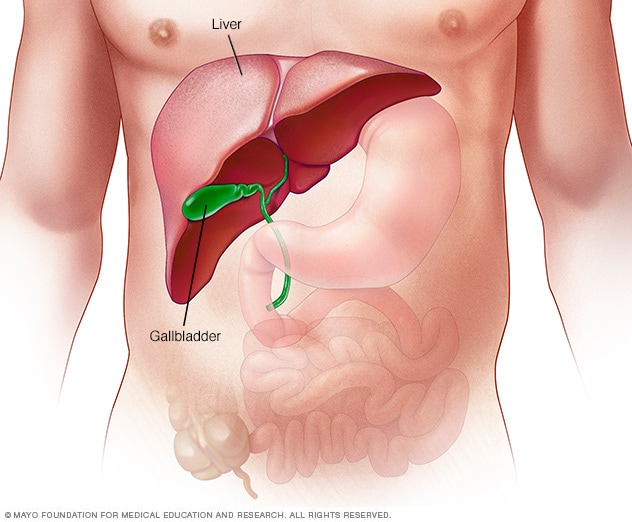
Cirrhosis is a late stage of scarring (fibrosis) of the liver caused by many forms of liver diseases and conditions, such as hepatitis and chronic alcoholism. The liver carries out several necessary functions, including detoxifying harmful substances in your body, cleaning your blood and making vital nutrients.
Cirrhosis occurs in response to damage to your liver. Each time your liver is injured, it tries to repair itself. In the process, scar tissue forms. As cirrhosis progresses, more and more scar tissue forms, making it difficult for the liver to function.
Decompensated cirrhosis is the term used to describe the development of specific complications resulting from the changes brought on by cirrhosis. Decompensated cirrhosis is life-threatening.
The liver damage done by cirrhosis generally can't be undone. But if liver cirrhosis is diagnosed early and the cause is treated, further damage can be limited and, rarely, reversed.

Symptoms

Cirrhosis often has no signs or symptoms until liver damage is extensive. When signs and symptoms do occur, they may include:
  • Fatigue
  • Bleeding easily
  • Bruising easily
  • Itchy skin
  • Yellow discoloration in the skin and eyes (jaundice)
  • Fluid accumulation in your abdomen (ascites)
  • Loss of appetite
  • Nausea
  • Swelling in your legs
  • Weight loss
  • Confusion, drowsiness and slurred speech (hepatic encephalopathy)
  • Spiderlike blood vessels on your skin
  • Redness in the palms of the hands
  • Testicular atrophy in men
  • Breast enlargement in men

Causes

A wide range of diseases and conditions can damage the liver and lead to cirrhosis. The most common causes are:
  • Chronic alcohol abuse
  • Chronic viral hepatitis (hepatitis B and C)
  • Fat accumulating in the liver (nonalcoholic fatty liver disease)
Other possible causes include:
  • Iron buildup in the body (hemochromatosis)
  • Cystic fibrosis
  • Copper accumulated in the liver (Wilson's disease)
  • Poorly formed bile ducts (biliary atresia)
  • Inherited disorders of sugar metabolism (galactosemia or glycogen storage disease)
  • Genetic digestive disorder (Alagille syndrome)
  • Liver disease caused by your body's immune system (autoimmune hepatitis)
  • Destruction of the bile ducts (primary biliary cirrhosis)
  • Hardening and scarring of the bile ducts (primary sclerosing cholangitis)
  • Infection such schistosomiasis
  • Medications such as methotrexate

Complications

Complications of cirrhosis can include:
Complications related to blood flow:
  • High blood pressure in the veins that supply the liver (portal hypertension).Cirrhosis slows the normal flow of blood through the liver, thus increasing pressure in the vein that brings blood from the intestines and spleen to the liver.
  • Swelling in the legs and abdomen. Portal hypertension can cause fluid to accumulate in the legs (edema) and in the abdomen (ascites). Edema and ascites also may result from the inability of the liver to make enough of certain blood proteins, such as albumin.
  • Enlargement of the spleen (splenomegaly). Portal hypertension can also cause changes to the spleen. Decreased white blood cells and platelets in your blood can be a sign of cirrhosis with portal hypertension.
  • Bleeding. Portal hypertension can cause blood to be redirected to smaller veins, causing them to increase in size and become varices. Strained by the extra load, these smaller veins can burst, causing serious bleeding. Life-threatening bleeding most commonly occurs when veins in the lower esophagus (esophageal varices) or stomach (gastric varices) rupture. If the liver can't make enough clotting factors, this also can contribute to continued bleeding. Bacterial infections are a frequent trigger for bleeding.
Diagnosis

People with early-stage cirrhosis of the liver usually don't have symptoms. Often, cirrhosis is first detected through a routine blood test or checkup. Your doctor may order one or more laboratory tests that may suggest a problem with your liver, such as cirrhosis.
Laboratory tests:
  • Liver function. Your blood is checked for excess bilirubin, which is a product of red blood cells breaking down, as well as for certain enzymes that may indicate liver damage.
  • Kidney function. Your blood is checked for creatinine as kidney function may decline in later stages of cirrhosis (decompensated cirrhosis).
  • Tests for hepatitis B and C. Your blood is checked for the hepatitis viruses.
  • Clotting. Your international normalized ratio (INR) is checked for your blood's ability to clot.
Your doctor may order imaging and other tests to further diagnose cirrhosis:
  • Magnetic resonance elastography or transient elastography. These noninvasive imaging tests detect hardening or stiffening of the liver and may eliminate the need for a liver biopsy.
  • Other imaging tests. MRI, CT and ultrasound create images of the liver.
  • Biopsy. A tissue sample (biopsy) is not necessarily needed to diagnose cirrhosis. However, your doctor may use it to identify the severity, extent and cause of liver damage.
If you have cirrhosis, your doctor is likely to recommend regular diagnostic tests to monitor for signs of disease progression or complications, especially esophageal varices and liver cancer.

Treatment

Treatment for cirrhosis depends on the cause and extent of your liver damage. The goals of treatment are to slow the progression of scar tissue in the liver and to prevent or treat symptoms and complications of cirrhosis. You may need to be hospitalized if you have severe liver damage.

Treatment for the underlying cause of cirrhosis

In early cirrhosis, it may be possible to minimize damage to the liver by treating the underlying cause. The options include:
  • Treatment for alcohol dependency. People with cirrhosis caused by alcohol abuse should stop drinking. If you have cirrhosis, it is essential to stop drinking since any amount of alcohol is toxic to the liver. If stopping alcohol use is difficult, your doctor may recommend a treatment program for alcohol addiction.
  • Weight loss. People with cirrhosis caused by nonalcoholic fatty liver disease may become healthier if they lose weight and control their blood sugar levels. It is important to maintain adequate protein intake while attempting weight loss in the setting of cirrhosis.
  • Medications to control hepatitis. Medications may limit further damage to liver cells caused by hepatitis B or C through specific treatment of these viruses.
  • Medications to control other causes and symptoms of cirrhosis. Medications may slow the progression of certain types of liver cirrhosis. For example, for people with primary biliary cirrhosis (now known as primary biliary cholangitis) that is diagnosed early, medication may significantly delay progression to cirrhosis.
Other medications can relieve certain symptoms, such as itching, fatigue and pain. Nutritional supplements may be prescribed to counter malnutrition associated with cirrhosis and to prevent weak bones (osteoporosis).

Treatment for complications of cirrhosis

Your doctor will work to treat any complications of cirrhosis, including:
  • Excess fluid in your body. A low-sodium diet and medication to prevent fluid buildup in the body may help control ascites and swelling. More-severe fluid buildup may require procedures to drain the fluid or other interventions to relieve pressure. At times, a small tube — a transjugular intrahepatic portosystemic shunt (TIPS) — is placed in the vein within the liver to reduce blood pressure in your liver and slow the rate of fluid accumulation.
  • Portal hypertension. Certain blood pressure medications may control increased pressure in the veins that supply the liver (portal hypertension) and prevent severe bleeding. Your doctor will perform an upper endoscopy at regular intervals to look for enlarged veins in the esophagus or stomach (varices) that may bleed.
    If you develop varices, you likely will need medication to reduce the risk of bleeding. If you are not able to tolerate medication and have signs that the varices are bleeding or are likely to bleed, you may need a procedure (band ligation) to stop the bleeding or reduce the risk of further bleeding. In severe cases, a TIPS can be placed in the vein within the liver to reduce blood pressure in your liver and to prevent further bleeding.
  • Infections. You may receive antibiotics or other treatments for infections. Your doctor also is likely to recommend vaccinations for influenza, pneumonia and hepatitis.
  • Increased liver cancer risk. Your doctor will recommend blood tests and ultrasound exams every six months to look for signs of liver cancer.
  • Hepatic encephalopathy. You may be prescribed medications to help prevent the buildup of toxins in your blood due to poor liver function.

Liver transplantation

In advanced cases of cirrhosis, when the liver ceases to function, a liver transplant may be the only treatment option. People usually need to consider this option when they develop symptoms from cirrhosis, such as jaundice, significant fluid retention (ascites), bleeding varices, hepatic encephalopathy, kidney dysfunction, or liver cancer. A liver transplant replaces your liver with a healthy liver from a deceased donor or with part of a liver from a living donor. Cirrhosis is the most common reason for a liver transplant.
Candidates for liver transplant undergo extensive testing to determine whether they are healthy enough to have a good outcome following surgery. Additionally, transplant centers typically require some period of abstinence alcohol for people with alcohol-related liver disease before they can receive transplants