
Heart failure is a condition in which the heart is no longer able to pump oxygen-rich blood to the rest of the body efficiently. This causes symptoms to occur throughout the body.
Heart failure is most often a long-term (chronic) condition, but it may come on suddenly. It can be caused by many different heart problems.
The condition may affect only the right side or only the left side of the heart. More often, both sides of the heart are involved.
Heart failure is present when:
- Your heart muscle cannot pump (eject) the blood out of the heart very well. This is called systolic heart failure.
- Your heart muscle is stiff and does not fill up with blood easily. This is called diastolic heart failure.
As the heart's pumping becomes less effective, blood may back up in other areas of the body. Fluid may build up in the lungs, liver, gastrointestinal tract, and the arms and legs. This is called congestive heart failure.
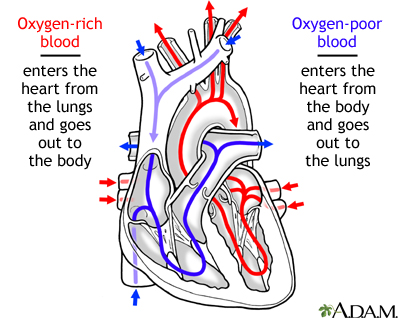
The most common causes of heart failure are:
- Coronary artery disease (CAD), a narrowing of the small blood vessels that supply blood and oxygen to the heart. This can weaken the heart muscle over time or suddenly.
- High blood pressure that is not well controlled, leading to problems with stiffness, or eventually leading to muscle weakening.
Other heart problems that may cause heart failure are:
- Congenital heart disease
- Heart attack
- Heart valves that are leaky or narrowed
- Infection that weakens the heart muscle
- Some types of abnormal heart rhythms (arrhythmias)
Other diseases that can cause or contribute to heart failure:
- Amyloidosis
- Emphysema
- Overactive thyroid
- Sarcoidosis
- Severe anemia
- Too much iron in the body
- Underactive thyroid
Symptoms of heart failure often begin slowly. At first, they may only occur when you are very active. Over time, you may notice breathing problems and other symptoms even when you are resting. Symptoms may also appear suddenly after the heart is damaged from a heart attack or other problem.
Common symptoms are:
- Cough
- Fatigue, weakness, faintness
- Loss of appetite
- Need to urinate at night
- Pulse that feels fast or irregular, or a sensation of feeling the heartbeat (palpitations)
- Shortness of breath when you are active or after you lie down
- Swollen (enlarged) liver or abdomen
- Swollen feet and ankles
- Waking up from sleep after a couple of hours due to shortness of breath
- Weight gain
Your health care provider will examine you for signs of heart failure:
- Fast or difficult breathing
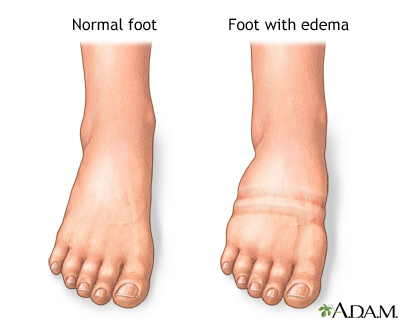
- Leg swelling (edema)
- Neck veins that stick out (are distended)
- Sounds (crackles) from fluid buildup in your lungs, heard through a stethoscope
- Swelling of the liver or abdomen
- Uneven or fast heartbeat and abnormal heart sounds
An echocardiogram (echo) is most often the best first test for people when heart failure is being evaluated. Your provider will use it to guide your treatment.
Other imaging tests can look at how well your heart is able to pump blood, and how much the heart muscle is damaged.
Many blood tests may also be used to:
- Help diagnose and monitor heart failure
- Identify risks for various types of heart disease
- Look for possible causes of heart failure, or problems that may make your heart failure worse
- Monitor for side effects of medicines you may be taking
MONITORING AND SELF CARE
If you have heart failure, your provider will monitor you closely. You will have follow-up visits at least every 3 to 6 months, but sometimes much more often. You will also have tests to check your heart function.
Knowing your body and the symptoms that your heart failure is getting worse will help you stay healthier and out of the hospital. At home, watch for changes in your heart rate, pulse, blood pressure, and weight.
Weight gain, especially over a day or two, can be a sign that your body is holding on to extra fluid and your heart failure is getting worse. Talk to your provider about what you should do if your weight goes up or you develop more symptoms.
Limit how much salt you eat. Your provider may also ask you to limit how much fluid you drink during the day.
Other important changes to make in your lifestyle:
- Ask your provider how much alcohol you may drink.
- DO NOT smoke.
- Stay active. Walk or ride a stationary bicycle. Your provider can provide a safe and effective exercise plan for you. DO NOT exercise on days when your weight has gone up from fluid or you are not feeling well.
- Lose weight if you are overweight.
- Lower your cholesterol by changing your lifestyle.
- Get enough rest, including after exercise, eating, or other activities. This allows your heart to rest too.
MEDICINES, SURGERY, AND DEVICES
You will need to take medicines to treat your heart failure. Medicines treat the symptoms, prevent your heart failure from getting worse, and help you live longer. It is very important that you take your medicine as your health care team directed.
These medicines:
- Help the heart muscle pump better
- Keep your blood from clotting
- Lower your cholesterol levels
- Open up blood vessels or slow your heart rate so your heart does not have to work as hard
- Reduce damage to the heart
- Reduce the risk of abnormal heart rhythms
- Replace potassium
- Rid your body of excess fluid and salt (sodium)
It is very important that you take your medicine as directed. DO NOT take any other drugs or herbs without first asking your provider about them. Drugs that may make your heart failure worse include:
- Ibuprofen (Advil, Motrin)
- Naproxen (Aleve, Naprosyn)
The following surgeries and devices may be recommended for some people with heart failure:
- Coronary bypass surgery (CABG) or angioplasty with or without stenting may help improve blood flow to the damaged or weakened heart muscle.
- Heart valve surgery may be done if changes in a heart valve are causing your heart failure.
- A pacemaker can help treat slow heart rates or help both sides of your heart contract at the same time.
- A defibrillator sends an electrical pulse to stop life-threatening abnormal heart rhythms.
END-STAGE HEART FAILURE
Severe heart failure occurs when treatments no longer work. Certain treatments may be used when a person is waiting for a heart transplant:
- Intra-aortic balloon pump (IABP)
- Left or right ventricular assist device (LVAD)
- Total artificial heart
At a certain point, the provider will decide whether it is best to keep treating heart failure aggressively. The person, along with his or her family and doctors, may want to discuss palliative or comfort care at this time.
Often, you can control heart failure by taking medicine, changing your lifestyle, and treating the condition that caused it.
Heart failure can suddenly get worse due to:
- Ischemia (lack of blood flow to the heart muscle)
- Eating high-salt foods
- Heart attack
- Infections or other illnesses
- Not taking medicines correctly
- New, abnormal heart rhythms
Most of the time, heart failure is a chronic illness that gets worse over time. Some people develop severe heart failure. Medicines, other treatments, and surgery no longer help at this stage.
People with heart failure may be at risk for dangerous heart rhythms. These people often receive an implanted defibrillator.
Call your provider if you develop:
- Increased cough or phlegm
- Sudden weight gain or swelling
- Weakness
- Other new or unexplained symptoms
Go to the emergency room or call the local emergency number (such as 911) if:
- You faint
- You have fast and irregular heartbeat (especially if you also have other symptoms)
- You feel a severe crushing chest pain
Most cases of heart failure can be prevented by living a healthy lifestyle and taking steps aimed at reducing your risk for heart disease.
.
CHF; Congestive heart failure; Left-sided heart failure; Right-sided heart failure - cor pulmonale; Cardiomyopathy - heart failure; HF
- ACE inhibitors
- Antiplatelet drugs - P2Y12 inhibitors
- Being active when you have heart disease
- Heart bypass surgery - discharge
- Heart failure - discharge
- Heart failure - fluids and diuretics
- Heart failure - home monitoring
- Heart failure - what to ask your doctor
- Heart pacemaker - discharge
- Implantable cardioverter defibrillator - discharge


